
ACADEMIC PROGRAMME
Diploma in Hadith Studies
A continuous reading of Ṣaḥīḥ al-Bukhārī — the Arabic text, its interpretation by the ḥadīth scholars, the principles of the science, and the method by which Imām al-Bukhārī arranged his work.
Enrolment now open for the October 2026 intake — Semester 4
Watch a sample lesson
Enrol for the October 2026 intake – Semester 4
Fee: $150 per semester · Early bird: $120 until 15 October 2026
Ḥadīth is often taught as a collection of individual reports. This diploma treats Ṣaḥīḥ al-Bukhārī as what it is: a structured work, arranged by a scholar who made deliberate choices about which report to place under which chapter heading, and why.
Every ḥadīth is studied in full — the Arabic text, its interpretation by the recognised commentators, the principles of uṣūl al-ḥadīth as the text raises them, and what the report asks of a Muslim living now. This is unhurried reading. Seven reports in a session is the working pace, and the diploma proceeds book by book across successive semesters, giving each ḥadīth the time it deserves.
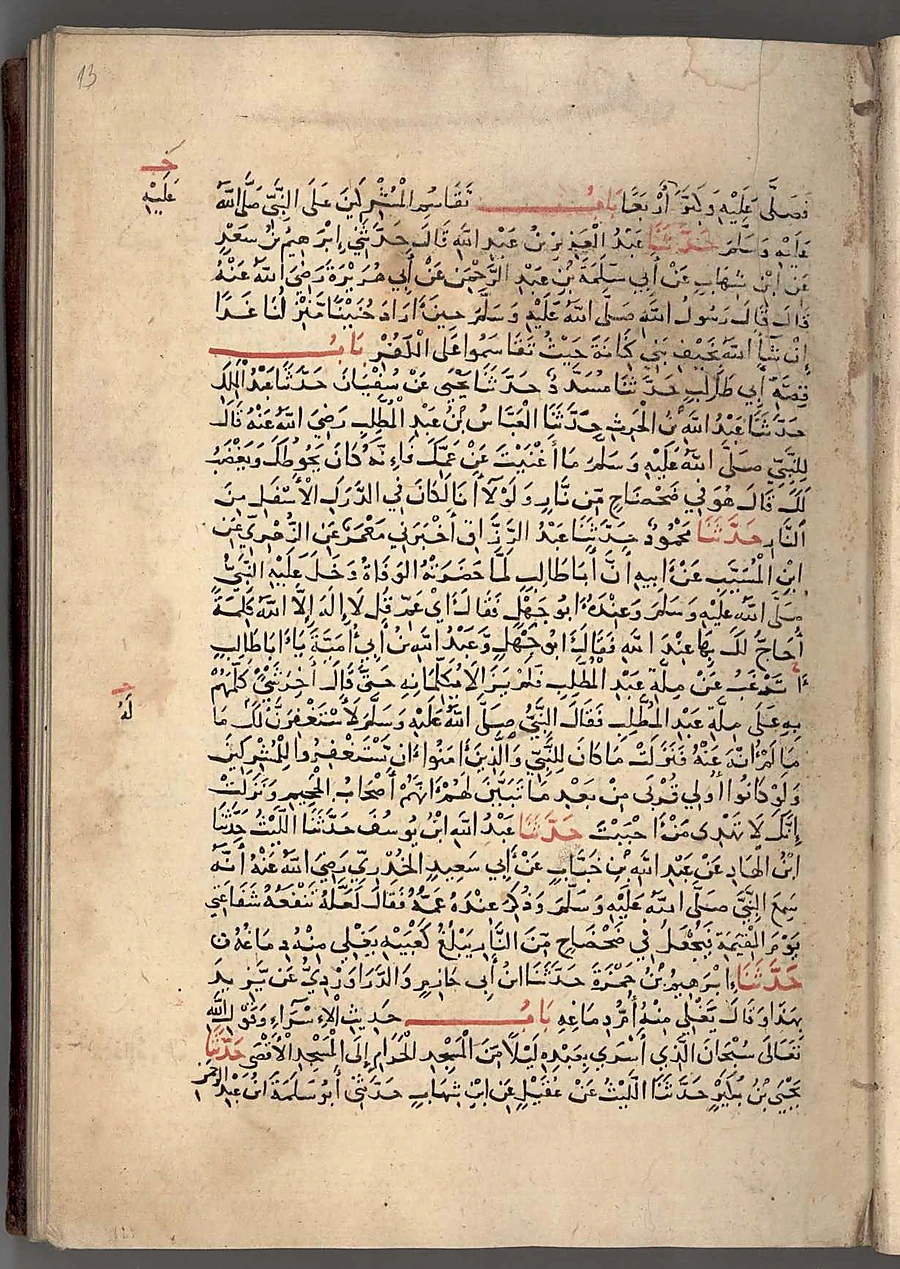
Folio from a copy of Ṣaḥīḥ al-Bukhārī, dated 1017 CE, with chapter headings in red. National Library of Bulgaria, via the Library of Congress.
Duration
16 weeks per semester
Structure
32 lectures · up to 7 aḥādīth per lecture
Languages
Urdu
Level
Diploma · beginners welcome, Arabic an advantage
Timings
Mondays & Tuesdays · 4:00–5:00 PM PKT (2:00 PM KSA · 11:00 GMT)
Taught in Urdu
Recorded lectures available to enrolled students
The programme so far
Three semesters have been taught to completion, each covering complete books of the Ṣaḥīḥ.
Semester One
كتاب بدء الوحي — Kitāb Badʾ al-Waḥy · كتاب الإيمان — Kitāb al-Īmān
Semester Two
كتاب الجهاد والسير — Kitāb al-Jihād wa’l-Siyar
Semester Three
كتاب بدء الخلق — Kitāb Badʾ al-Khalq · كتاب الرقاق — Kitāb al-Riqāq
The coming semester — Kitāb al-Ṭahārah
The fourth semester covers the four books of purification in their entirety, from the opening of Kitāb al-Wuḍūʾ to the close of Kitāb al-Tayammum. A student completing this semester will have read the whole of what Imām al-Bukhārī gathered on ṭahārah, without omission.
كتاب الوضوء — Kitāb al-Wuḍūʾ
Aḥādīth 135–247 · 113 reports
كتاب الغسل — Kitāb al-Ghusl
Aḥādīth 248–293 · 46 reports
كتاب الحيض — Kitāb al-Ḥayḍ
Aḥādīth 294–333 · 40 reports
كتاب التيمم — Kitāb al-Tayammum
Aḥādīth 334–348 · 15 reports
214 reports across 32 lectures. At seven aḥādīth per session the semester has capacity for 224, which leaves margin for the sessions that require more time. The scope is set so that it can be completed, not so that it sounds ambitious.
Kitāb al-Ṣalāh and the books of prayer follow in the semesters ahead. Our mission is to read Ṣaḥīḥ al-Bukhārī in full, book by book, across successive semesters — giving every ḥadīth the time it deserves rather than fixing the work to a set number of years.
What distinguishes this programme
Teaching approach
Methodology. Each lecture covers a defined range of aḥādīth, specified by number — ordinarily seven. The Arabic text is read, the chapter heading examined, the report’s placement discussed, the commentators consulted, and the principal points recorded. Relevant principles of uṣūl al-ḥadīth are introduced as the text raises them rather than taught in the abstract. A short weekly assessment covers that week’s material.
Philosophy. A student who has read a book of the Ṣaḥīḥ from beginning to end understands something no anthology can convey: how a subject is built. The aim is not to accumulate reports but to acquire the habit of reading a classical work as its author arranged it, at a pace that allows each report to be understood rather than merely passed over.
Who this programme is for
Learning outcomes
Primary references
صحيح البخاري — Ṣaḥīḥ al-Bukhārī. The text itself, the primary source throughout
فتح الباري — Fatḥ al-Bārī, Ibn Ḥajar al-ʿAsqalānī
عمدة القاري — ʿUmdat al-Qārī, Badr al-Dīn al-ʿAynī
إرشاد الساري — Irshād al-Sārī, Aḥmad b. Muḥammad al-Qasṭallānī
الكواكب الدراري — Al-Kawākib al-Darārī, Shams al-Dīn Muḥammad b. Yūsuf al-Kirmānī
الكوثر الجاري إلى رياض أحاديث البخاري — Al-Kawthar al-Jārī, Shihāb al-Dīn Aḥmad b. Ismāʿīl al-Kūrānī
فيض الباري — Fayḍ al-Bārī, ʿAllāmah Anwar Shāh al-Kashmīrī
لامع الدراري — Lāmiʿ al-Darārī, Mawlānā Rashīd Aḥmad Gangohī
كشف الباري — Kashf al-Bārī, Mawlānā Salīm Allāh Khān (Urdu)
إنعام الباري — Inʿām al-Bārī, from the lectures of Mufti Muḥammad Taqī ʿUthmānī (Urdu)
Urdu and English translations are used alongside the original throughout. Students may find Islamic Urdu Books and Sunnah.com useful for following the text between sessions.
Responsible use of AI
Artificial intelligence assists with reference and navigation: locating a report, cross-referencing a topic across books, and producing tables and diagrams for teaching.
No ḥadīth is quoted from AI, and no grading of a report is accepted from it. Text and authentication come from the printed sources and the recognised commentaries. This limit is stated to students in the first session.
Frequently asked questions
After this programme
Enrol for the October 2026 intake – Semester 4
Fee: $150 per semester · Early bird: $120 until 15 October 2026
Not ready to enrol yet? Register your interest
Leave your details below and we will let you know about future intakes and programme updates. No other correspondence will be sent.